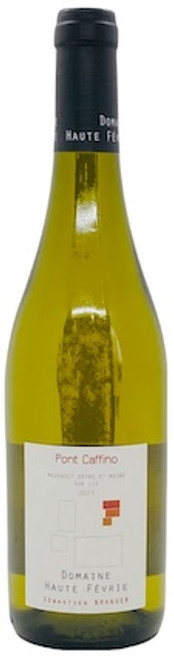


Region: France - Loire Valley - Muscadet
Grapes: Melon de Bourgogne
Alcohol: 12.5%
Notes on the Wine
The main idea for Muscadet at the domaine is old vines, low yields, hand harvests. The “Sélection” bottling comes from 20- and 40-year-old vines grown on sandy-silty soils over gabbro. Cyrille and Sylvain point out that “the cycle of melon de bourgogne on these lands is rather ‘tardif’ and these parcels are often picked towards the end of the harvest.” In spite of this the wine does not typically go through malolactic and remains focused and bright, drawing an energetic expression from the terroir. Muscadet wines at the domaine are treated traditionally, fermented with native yeasts in underground concrete vats. “Sélection” typically ages in concrete an additional 8 months sur lie prior to bottling.
Notes on the Producer
In the 16th century, Domaine de l’Epinay belonged to the Espinozas, a wealthy Spanish trading family. After the French Revolution, a local civil conflict known as the Vendée Wars resulted in the burning and destruction of many buildings and archives in and around Nantes, leaving few records. “But, we know that the culture of the vine already existed,” note Cyrille and Sylvain. “It started at the end of the 17th century, thanks to monks from Burgundy. They brought with them their grapes—especially the melon de bourgogne.” The Pays Nantais had, in fact, been a red wine region until the lethal winter of 1709. Replanting was to prolific white varieties; high-yielding melon de bourgogne, in particular, satisfied Dutch traders’ appetites for neutral base wines for their brandies. The grape flourished in the cool, damp climate and granitic soils around these parts while the presence of small, navigable rivers, all connected to the Loire and the Atlantic, facilitated the wine’s transport and trade.
Fast forward to 1900, the year the Paquereau family took over the domaine. For much of the 20th century, they managed it as a typical mixed farm of dairy, cereals, and vines. In the early 1970s, Albert and Odile Paquereau narrowed their focus to wine while expanding their holdings from 5 to 30 hectares. In 2000, Cyrille, their elder son, returned to the estate from a range of apprenticeships and trainings, and in 2006, younger son Sylvain followed, at which point the brothers took over from their parents. In 2011, Cyrille and Sylvain began the conversion to organic farming, starting with the Clisson cru holdings. Today, the domaine stretches to 52 hectares, nearly half of which are devoted to melon.